
Use cases / Grain analysis
Use case: grain analysis
AI grain sample analysis in seconds
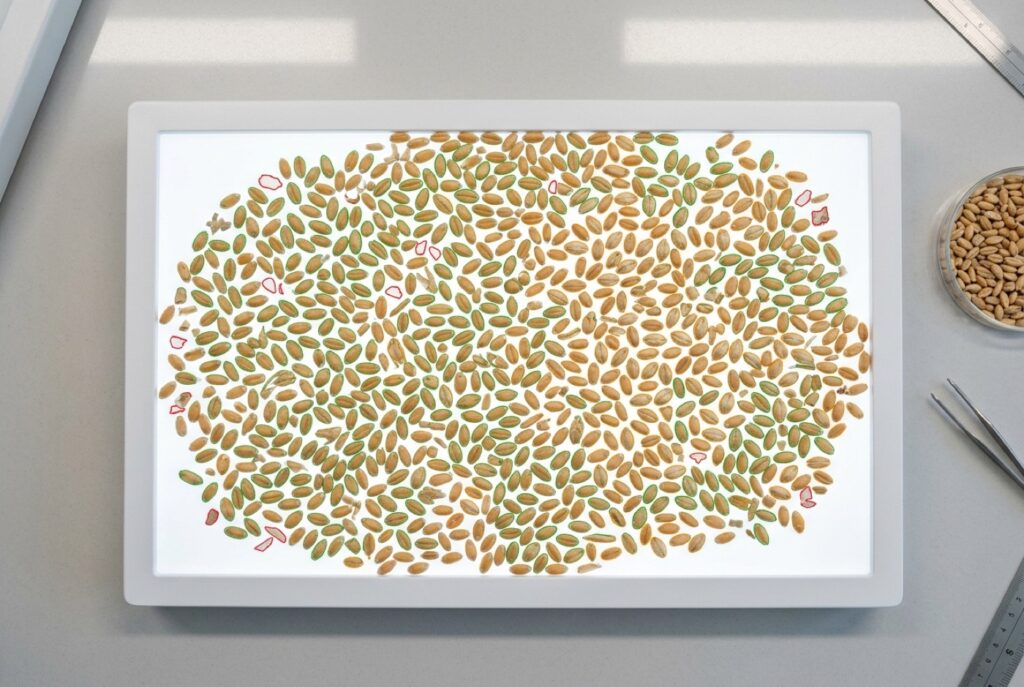
A solution for grain laboratories that replaces a monotonous manual process of about 30 minutes with an automated analysis of about 3 seconds.
What it detects
What the analysis covers
Detection of a wide range of quality parameters and impurities.
Sorting and grading
Grains are categorized by size, quality and type, and graded to established standards.
Quality control
Defects, damage and contamination are detected.
Purity testing
Foreign materials and impurities are identified and separated.
Shape and size analysis
Physical characteristics are measured against requirements.
Color analysis
Color metrics are used to assess quality and type.
Real-time results
Results are shown immediately for further evaluation.
How it works
Running on your line in four steps
The same EasyODM software workflow applies to every product.
Capture
Industrial cameras take images of every product at line speed.
Label
Your quality team marks good and defective examples. No coding.
Train
EasyODM trains a model on your products and acceptance criteria.
Inspect
Every item is checked inline, with rejection, sorting or alerts.
Why EasyODM
Built for grain laboratories
Objective inspection
The same decision on every sample, every shift, without fatigue or subjectivity.
Real-time decisions
Results arrive inline, so defective items are removed before the next process step.
Fits your existing line
Works with your conveyors, PLCs and robots, without extra floor space.
Learns your product
The model keeps improving as your team confirms or corrects its decisions.
Quality data
Every defect is logged, so issues can be traced back to material or machines.
Lower cost of quality
Less manual inspection, less waste and fewer complaints reaching your customers.
Case study
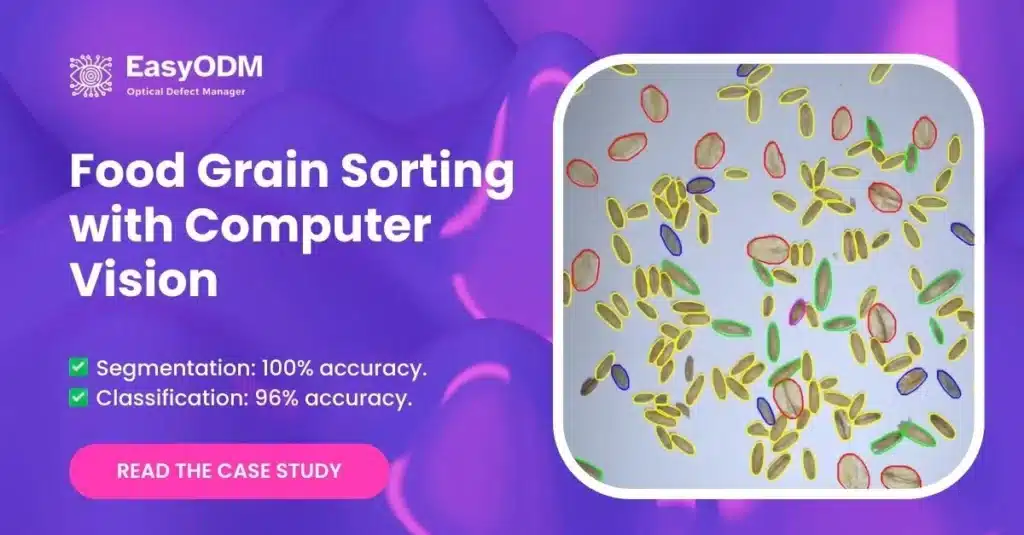
Food grain sorting with computer vision
How computer vision classifies grains and impurities, with the results of the study.
FAQ
Frequently asked questions
Can the system be customized to specific needs?
Yes, our system can be tailored to meet your unique requirements, providing reliable and accurate analysis for all your grain management needs.
Can the system integrate with other laboratory instruments?
Yes, the system can integrate with third-party instruments such as weight scales, moisture level monitors, barcode readers, and information systems for comprehensive data analysis.
Is there a minimum sample size requirement for analysis?
No, there is no minimum sample size requirement, making the system flexible for various sample sizes without the need for complicated trays.
How does the AI system contribute to cost savings?
The system reduces operator labor costs by replacing lengthy manual inspections with quick, automated analysis, and offers flexibility for night shifts and weekends. It also ensures better control of the process, increases yield, and reduces errors due to subjectivity and sample size.
What steps are involved in using the AI grain analysis system?
Using the system involves a simple 3-step process: 1. Load the grain sample, 2. Click ‘Start’ to initiate analysis, 3. Receive results in real-time.
Talk to an engineer
See the grain analysis in action
Book a consultation and we will show you the analysis on grain types relevant to you.
- Free consultation with an engineer
- Live demo with your defect types
- Works with your existing cameras
Book a free consultation
Explore more